Skip to Main Content

Advancing Disability Inclusion in APAC: A Strategic Update for Global Business Leaders
Emerging trends from APAC show disability inclusion becoming central to business strategy, with companies prioritizing accessible technology, neurodivergent talent, and frameworks that support long-term, measurable progress.



In Bengaluru, business leaders from across the Asia-Pacific region came together to share insights, explore emerging trends, and highlight opportunities for disability inclusion that drive innovation, growth, and competitive advantage. With 233 registrants from 87 companies across eight countries, the conversations pointed to trends relevant to every global business:
Disability Inclusion Drives Innovation and Market Opportunity
Across sessions and conversations, a clear theme emerged: individuals with disabilities bring distinct skills, perspectives, and problem-solving capabilities that strengthen organizations and fuel innovation. When companies design workplaces, technologies, and teams that are truly accessible, they unlock untapped potential that benefits the business and the broader economy. Disability-owned enterprises were also recognized as catalysts of economic growth for people with disabilities and their communities.
Business leaders emphasized that collaboration is essential to progress. By sharing best practices and building accessible ecosystems, organizations can accelerate disability inclusion in ways that benefit every stakeholder.
Accessibility Is No Longer a Side Conversation
The Knowledge Exchange session “Future Proofing Accessibility with AI” drew the largest audience, a powerful signal that accessibility is now central to business transformation and technological strategy. Employers must increasingly embed accessibility into product development and workforce systems, reflecting a broader shift in priority across industries.
Neuroinclusion Is Essential to Future Workforce Strategy
With projections indicating that 40% of the global workforce will be neurodivergent by 2040 (Everway), leaders in the region are focused on building workplaces where neurodivergent professionals can thrive. This trend is already shaping how companies design roles, supports, and environments that value diverse cognitive styles as drivers of performance and innovation.
.png)
Stories of Impact Shape Understanding and Action
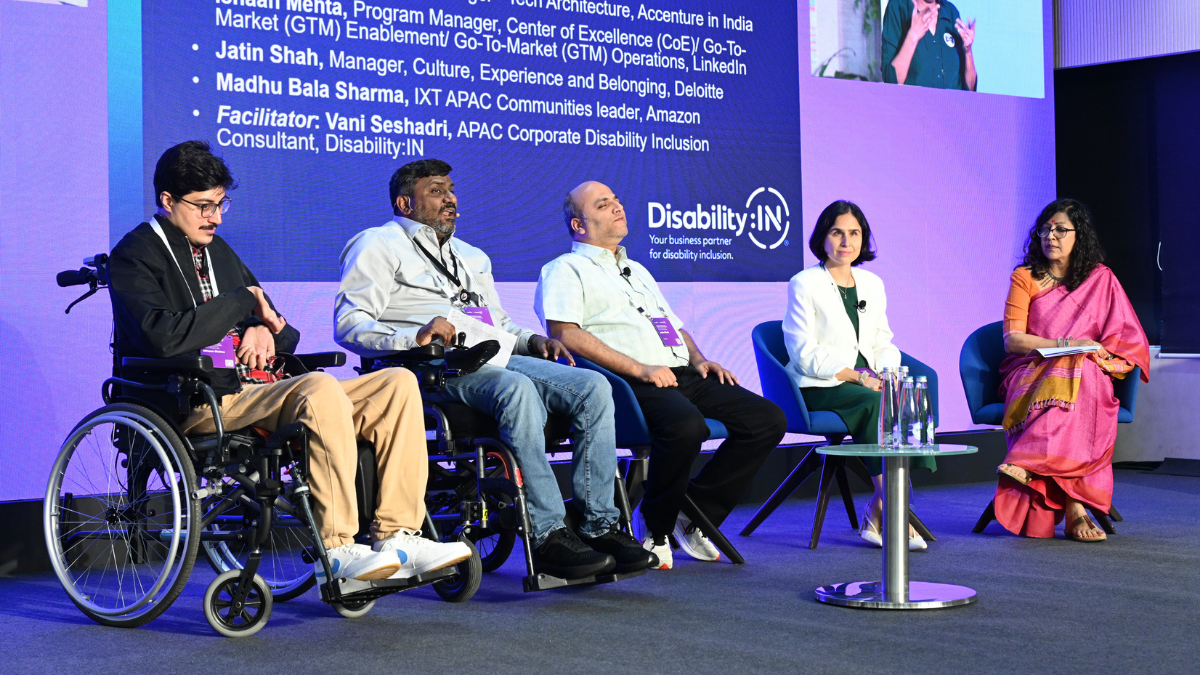
Insights from the “My Story Is In” panel, featuring employees with disabilities, resonated strongly with participants. Of the respondents to a post-event survey, more than half said the storytelling session had the greatest impact on their understanding of disability inclusion in APAC workplaces. These narratives reinforced a key lesson: when individuals with disabilities are empowered to excel, organizations benefit from richer culture, deeper engagement, and broader creativity.
Frameworks and Metrics Are Crucial to Sustainable Progress
A recurring theme among leaders was the value of pairing frameworks for long-term strategy with process-oriented goals and outcome metrics. Organizations that leverage tools like the Disability Index, may be better positioned to balance ambition with operational execution. This structured approach sustains momentum, strengthens accountability, and makes employers more attractive to professionals seeking meaningful impact.
.png)
Ready to join the conversation?
Learn How Disability:IN Can Support Your Business
Special thanks to the hosts of the Global Journey to Disability Inclusion APAC event, Accenture, with sponsorship support from Amazon, Bank of America, Google, Salesforce, Deloitte, and JPMorgan Chase.