Skip to Main Content
Disability:IN Unveils Innovative Evidence-Based Framework to Advance Neuroinclusion in the Workforce
Landmark study defines roadmap to boosting productivity, advancing human capital strategies to deliver long-term business impact around the world.
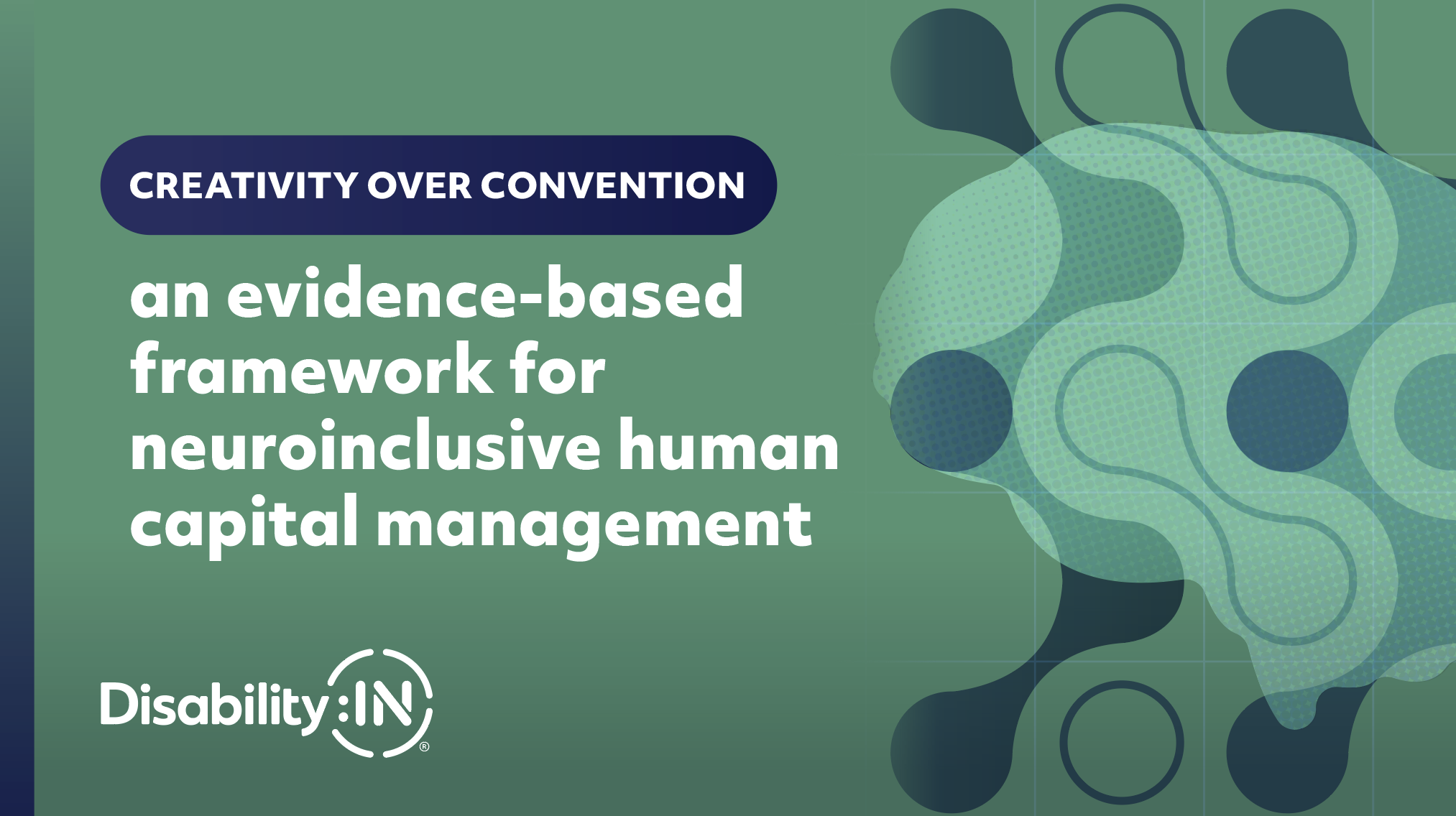


WASHINGTON, D.C. July 25, 2025 – Disability:IN, the leading nonprofit resource for business disability inclusion worldwide, recently announced groundbreaking research that introduces an actionable framework for fostering neurodiverse workforces – specifically businesses that embrace neurodivergent individuals who contribute to long-term business success.
“Creativity Over Convention: An Evidence-based Framework for Neuroinclusive Human Capital Management,” recognizes neurodiversity as the naturally occurring variation in human cognition. According to the study, “All minds work differently” including how they process information and interact with others.
Based on the findings of the qualitative study, which included comprehensive interviews representing global participation and generational diversity, the study has critical implications for businesses worldwide – especially those that prioritize human capital management as a competitive advantage, and seek proven, evidence-based people strategies to fuel business momentum. The five-month study spanned eight countries and concluded in March 2025.
“As a leading voice on disability inclusion globally, we are often asked how best to attract and retain top talent, especially as we address the needs of a global workforce that is expected to be 40% neurodivergent by 2040,” said Jill Houghton, President and CEO of Disability:IN. “Our study identifies the pillars of a human capital management strategy that delivers enormous value to any business. We’ve seen firsthand how businesses that cultivate a neuroinclusive workplace foster productivity – not for some but for everyone”
Survey Prompts Actionable Strategies, Bottomline Benefits
Key findings – which outline actions to increasing productivity for all employees, included:

- People with disabilities innovate to navigate their day-to-day – and bring that mindset to work.
69% of neurodivergent men and women surveyed with diagnoses including autism, ADHD, post-traumatic stress and learning disorders report “advantageous cognitive characteristics” associated with their neurodiversity.
- A neuroinclusive workforce is a more productive and engaged workforce, benefiting everyone.
Communication styles, support needs, and management styles that support neurodivergent employees can lead to greater productivity and higher levels of engagement. Based on the study, 65% of those surveyed participate in their employer’s disability data collection efforts while 64% elect to self-identify as a person with a disability, an engagement level exceedingly higher than in the general employee population globally. According to the study, “younger generations of neurodivergent people are keenly aware of their work-based strengths and struggles, and they turn to ERGs for resources, community and support.”
- Neurodivergent talent are early adopters of Artificial Intelligence (AI), bringing future-ready skills to the workforce.
The disability community has become an early adopter of AI in everyday tasks, in particular, millennials surveyed (85%) followed by Gen X (57%), Baby Boomers (50%) and Gen Z (29%). Moreover, neurodivergent people are pioneering the use of AI to seek reassurance in the workplace by consulting with AI to ensure that their ideas are cogent, concise, and accessible to others before sharing them with colleagues.
Access the Study in its Entirety
Read “Creativity over Convention: An Evidence-based Framework for Neuroinclusive Human Capital Management.”
About the Study
Analysis from this qualitative study of neurodiversity in the workforce, conducted by Disability:IN from November 2024 to March 2025, is derived from neurodivergent people from partner companies who participated in a thirty-minute interviews. Seventy-five of 175 respondents were then purposively sampled to maximize global participation and generational diversity.
Approximately two-thirds of participants opted for a recorded virtual interview, while one-third submitted a fully anonymous online written interview form. Each interview was then analyzed for qualitative thematic markers representing demographic data, diagnostic information, neurological characteristics, workplace experiences, and personal identity. A quantitative data set was created to identify relationships between factors.
The findings of the qualitative analysis have been captured in a research brief that reflects the empirical findings from academic and industry literature on neurodiversity in the workplace.
The study received funding from HSBC and other Disability:IN corporate partners.
About Disability:IN
Disability:IN is the leading nonprofit resource for business disability inclusion worldwide. Disability:IN partners with leading companies and drives progress through initiatives, tools, and expertise that deliver long-term business impact.
To learn more about Disability:IN visit www.disabilityin.org.