Skip to Main Content
Momentum at Work: Disability and Career Mobility


Global Insights on How Disabled Talent Is Shaping the Future of Work
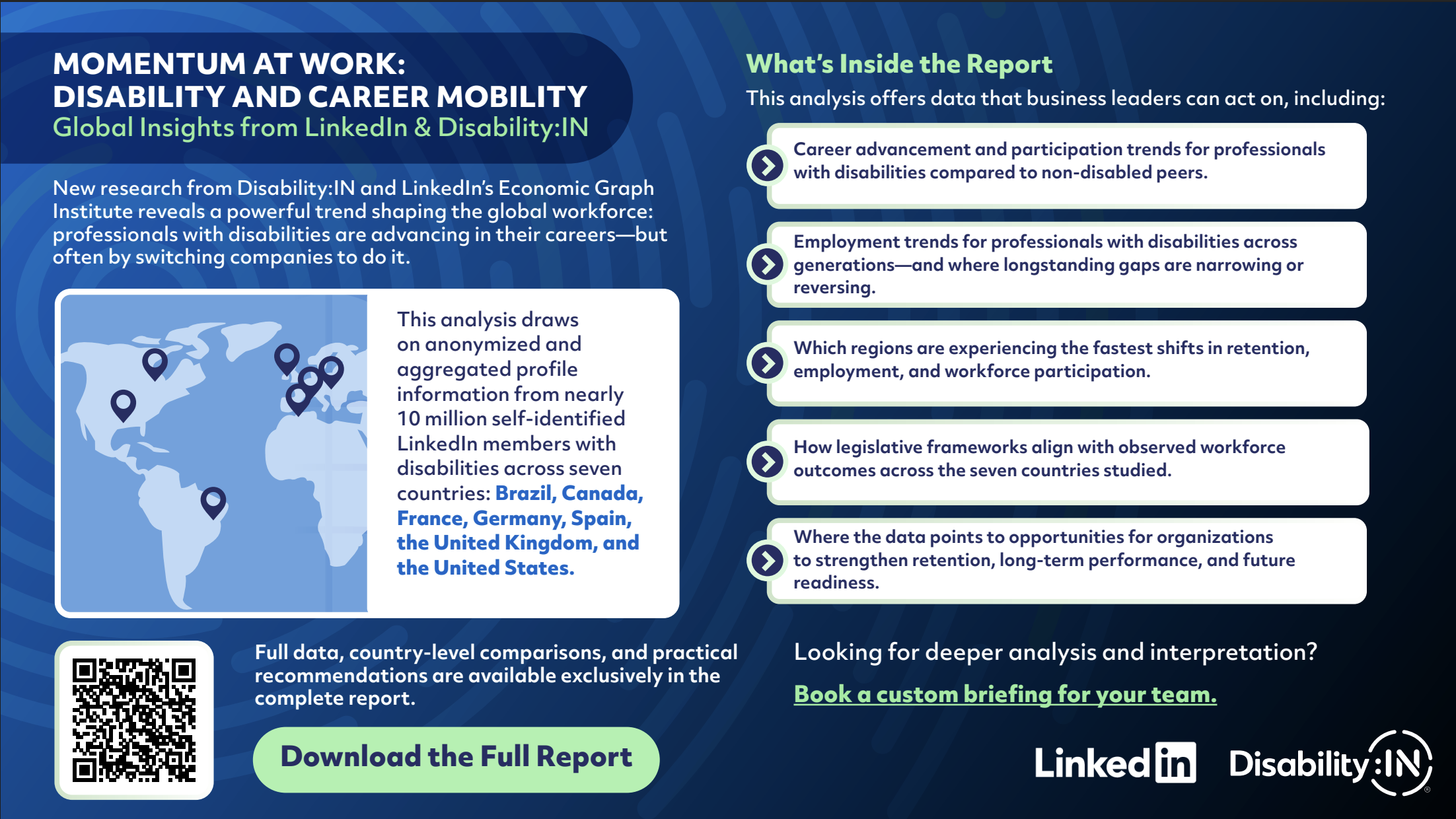
Across seven countries and nearly ten million LinkedIn members with disabilities, new global research reveals a powerful workforce trend: professionals with disabilities are advancing- but often by switching firms to do so.
This landmark analysis uncovers how talent with disabilities is driving new momentum across labor markets and what it means for today’s most competitive organizations.
Uncover global insights that will shape your workforce strategy for years to come.
Preview the Findings
Download Accessible PDF of the Report Snapshot
What's Inside the Report?
This analysis offers data that business leaders can act on, including:
- Career advancement and participation trends for professionals with disabilities compared to non-disabled peers.
- Employment trends for professionals with disabilities across generations—and where longstanding gaps are narrowing or reversing.
- Which regions are experiencing the fastest shifts in retention, employment, and workforce participation.
- How legislative frameworks align with observed workforce outcomes across the seven countries studied.
- Where the data points to opportunities for organizations to strengthen retention, long-term performance, and future readiness.
Explore more Data & Insights from Disability:IN
FAQs
What is the purpose of this report?
This report examines how disability status influences career mobility, professional networks, and workforce outcomes. By analyzing LinkedIn’s global labor market data, the research highlights disparities in network strength, career progression, and professional connectivity between professionals both with and without disabilities.
Who conducted this research?
This research was developed in collaboration between LinkedIn’s Economic Graph Research Institute (EGRI) and Disability:IN.
What data sources were used in this research?
This study draws on the anonymized and aggregated profile information of LinkedIn’s 1 billion+ members around the world. The sample is limited to Brazil, Spain, France, Canada,United Kingdom, Germany, and the United States for which there are at least250,000 Self-ID responses.
What are the key findings of this research?
This research found that LinkedIn members with disabilities often have smaller networks compared to members without disabilities, which can affect career mobility and visibility in the labor market. However, the research also shows that professionals with disabilities frequently maintain diverse indirect connections that expand their broader network and exposure to opportunities.
How should companies use the findings from this report?
Organizations can use the findings to better analyze gaps in employee retention and understand how access to professional networks influences disability inclusion and career growth.
Who should read this report?
This report is designed for:
- Corporate leaders and executives
- HR and talent development professionals
- Accessibility and disability inclusion practitioners
- Policymaker and workforce researchers
Access the Resource

Discover Disability-Related Dates